


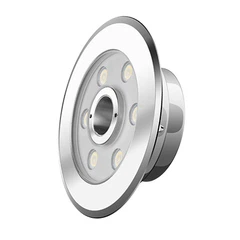


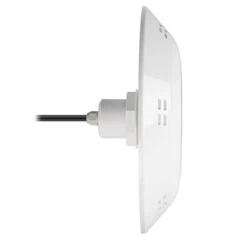


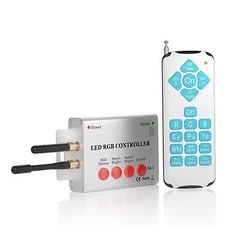


Shenzhen Heguang Lighting Co., Ltd. is well-known as one of the most reliable manufacturers and suppliers of outdoor lighting in China. If you're going to wholesale high quality outdoor lighting made in China, welcome to get free sample from our factory. We also accept customized orders.
outdoor lighting Features:
1. PCB board with high thermal conductivity, thermal conductivity ≥2.0w/mk
2. Constant current driver circuit design, DC24V input voltage
3. SMD3535 CREE chip, white/warm white/red/blue/red etc
4. Beam angle: 15°/30°/45°/60°
5. 2 Years warranty

outdoor lighting Parameters:
|
Model |
HG-FTN-24W-B1 |
|
|
Electrical |
Voltage |
DC24V |
|
Current |
1000ma |
|
|
Wattage |
24W±10% |
|
|
Optical |
LED chip |
SMD3535(CREE) |
|
LED (PCS) |
18 PCS |
|
|
CCT |
3000K±10%, 4300K±10%, 6500K±10% |
|
|
LUMEN |
2100LM±10% |
|
outdoor lighting Structure size:

FAQs on Underwater Outdoor Lighting
1. What is the IP68 rating? Is it sufficient for underwater environments?
IP68 Explanation: The first digit "6" indicates complete dustproofness, and the last digit "8" indicates it can withstand continuous immersion at depths exceeding 1 meter.
Practical Application: IP68 is a basic requirement. High-quality underwater lights should be labeled with specific depths and durations (e.g., "3 meters deep, 72 hours").
Advanced Options: For high-frequency fluctuations in environments like fountains and surf areas, it is recommended to choose products with IP69K (high-pressure washdown resistance) or IP68+M (water jet impact resistance).
2. Will underwater lighting harm fish and aquatic plants?
Safety depends on three key factors:
1. Spectral Control: Choose an "Eco Mode" that filters the 400-450nm blue light band to avoid disrupting the circadian rhythms of aquatic organisms.
2. Thermal Management: The surface temperature must be below 50°C (LED technology has achieved below 40°C) to prevent localized water temperature increases. 3. Installation Location: Avoid sensitive areas such as spawning areas and coral reefs, and use diffuse lighting to reduce direct sunlight.
Certification Reference: Products certified with "Blue Standard" or "Coral Safe" offer greater assurance.
4. How to achieve intelligent control of underwater lighting?
Comparison of mainstream solutions:
Wired control (DMX512/DALI): Excellent stability, suitable for fixed water features.
Radio frequency (Zigbee/RF): Flexible installation, but be aware of signal attenuation underwater (<3 meters).
Underwater acoustic control (innovative technology): Uses ultrasonic transmission for "zero-wiring" networking.
Hybrid solution (recommended): Use wired control underwater and wireless control above water, achieving both stability and convenience.
5. Why does the light beam shorten underwater? How can the visual effect be improved?
Optical principle: Water absorbs light much more efficiently than air (red light essentially disappears at a depth of 3 meters).
Efficiency-enhancing tips:
1. Choose cool light: Blue/green wavelengths have strong penetrating properties, resulting in a deeper visual effect.
2. Utilize suspended particles: A moderate amount of suspended matter in water can create a "Tyndall effect," enhancing the three-dimensional effect of the light beam.
3. Layered lighting: Use 3000K warm light in the foreground and 6000K cool light in the background to create a sense of depth.
6. What should you do in the event of an accidental water intrusion?
Three-step first aid:
1. Immediately disconnect the power cord: Disconnect the main power supply to prevent a short circuit and further damage.
2. Remove the fixture: Wipe the housing dry and drain water from the low-pressure port (if a drain hole is available).
3. Professional inspection: Contact after-sales service; do not disassemble the fixture yourself (this may cause seal failure).
7. What is the lifespan of underwater lighting?
Lifespan components:
LED light source: 50,000-100,000 hours (theoretical lifespan).
Power supply: 5-8 years (actual bottleneck; choose a high-quality brand and it can be extended to 10 years).
Sealing system: 3-5 years (seals require regular replacement).
Tips for prolonging life: avoid frequent switching (less than 10 times a day) and use a stabilized power supply.