






Hey there! As a supplier of wall washer lights, I often get asked about the installation spacing of these nifty lighting fixtures. So, I thought I'd sit down and write this blog to share some insights on this topic.

Understanding Wall Washer Lights
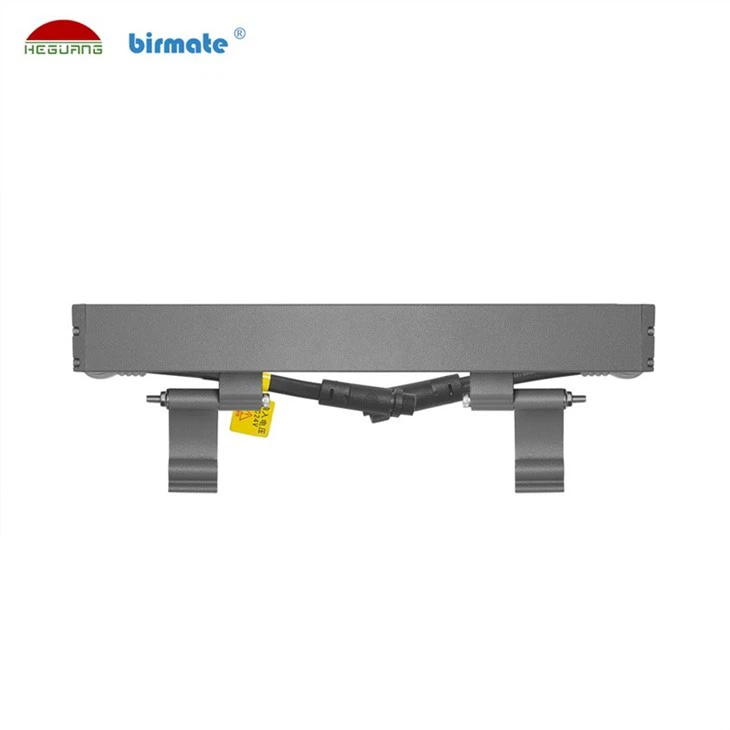
First off, let's quickly cover what wall washer lights are. Wall washer lights are designed to illuminate vertical surfaces, creating a "washed" effect of light that can highlight the texture, color, and architecture of a wall. They're used in a bunch of settings, from commercial buildings and museums to outdoor facades and even home decor.
Factors Affecting Installation Spacing
The installation spacing of wall washer lights isn't a one - size - fits - all deal. There are several factors that come into play.
1. Beam Angle
The beam angle of the wall washer light is a crucial factor. Lights with a narrow beam angle will produce a more concentrated light, so you might need to space them closer together to achieve an even wash of light on the wall. On the other hand, lights with a wide beam angle can cover a larger area, allowing for a greater installation spacing. For example, if you're using a wall washer with a 15 - degree beam angle, you'll probably need to space them about 1 to 2 feet apart, but for a 60 - degree beam angle, you could space them 3 to 5 feet apart.
2. Mounting Height
How high the wall washer lights are mounted above the ground or the base of the wall also affects the spacing. The higher the mounting height, the wider the spread of light on the wall. So, if you mount the lights higher, you can increase the installation spacing. Suppose you mount your lights 8 feet above the ground, you may have a larger distance between them compared to a mounting height of 4 feet.
3. Desired Lighting Effect
Do you want a subtle, evenly - lit wall, or are you going for a more dramatic, bold look? If you want a super smooth and even illumination, you'll need to space the lights closer. For a more uneven, artistic effect, you can play around with different spacing distances. Say, for a modern art gallery, you might use a more irregular spacing to create a unique visual impact, while in a corporate lobby, you'd likely opt for consistent and close spacing for a uniform look.
Calculating the Installation Spacing
To get a ballpark figure for the installation spacing, you can use a simple formula. First, determine the effective width of the light's beam at the desired distance from the light fixture to the wall. This distance is often referred to as the throw distance.
Let's say you have a wall washer light with a beam angle of θ (in degrees) and you want to know the beam width (W) at a throw distance (D). The formula for the beam width is:
W = 2 * D * tan(θ/2)
Once you have the beam width, you can divide the total length of the wall you want to illuminate by the beam width to get an idea of how many lights you'll need and the approximate spacing between them. However, keep in mind that this is just a starting point, and you may need to adjust based on the factors we mentioned earlier.
Practical Examples
Let's take a look at a couple of real - world scenarios to see how this all works in practice.
Outdoor Building Facade
Imagine you're lighting up the facade of a commercial building. You're using dc24v wall washer outdoor lights with a 30 - degree beam angle, and you're mounting them 6 feet above the ground. The throw distance from the light to the wall is 8 feet.
Using the formula W = 2 * D * tan(θ/2), where D = 8 feet and θ = 30 degrees:
W = 2 * 8 * tan(30/2)
W = 2 * 8 * tan(15)
W ≈ 2 * 8 * 0.268
W ≈ 4.29 feet
If the length of the facade is 100 feet, you'd divide 100 by 4.29, which gives you approximately 23 lights. So, the spacing between the lights would be around 100 / 23 ≈ 4.35 feet.
Indoor Museum Wall
Now, consider an indoor museum wall. You want a very even and soft illumination. You're using wall washer lights with a 45 - degree beam angle and mounting them 4 feet above the base of the wall, with a throw distance of 5 feet.
Using the formula again, with D = 5 feet and θ = 45 degrees:
W = 2 * 5 * tan(45/2)
W = 10 * tan(22.5)
W ≈ 10 * 0.414
W ≈ 4.14 feet
If the wall is 50 feet long, you'd need about 50 / 4.14 ≈ 12 lights. And the spacing between them would be roughly 50 / 12 ≈ 4.17 feet.
Installation Steps And Other Considerations
Before you start installing your wall washer lights, it's important to follow the Installation Steps Of Wall Washer. This will ensure that the lights are installed safely and correctly.
Also, there are some other correlation factors to keep in mind. For example, the color of the wall can affect how the light appears. A light - colored wall will reflect more light, while a dark - colored wall will absorb more. So, you may need to adjust the spacing or the intensity of the lights accordingly. You can find more about these factors in Some Correlation Factors Of Wall Washer.
Conclusion And Call To Action
Figuring out the installation spacing of wall washer lights can seem a bit tricky at first, but with a little understanding of the factors involved and some basic calculations, you can achieve the perfect lighting effect for your space.
As a wall washer light supplier, I'm here to help you with all your lighting needs. Whether you need advice on installation spacing, product selection, or anything else related to wall washer lights, I'm just a message away. If you're interested in purchasing our high - quality wall washer lights, feel free to reach out. We can have a chat, discuss your project requirements, and find the best lighting solutions for you. Let's work together to light up your world!
References
- Lighting Design Handbook
- Architectural Lighting Guidelines
- Manufacturer's Specifications for Wall Washer Lights