


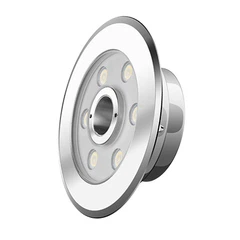


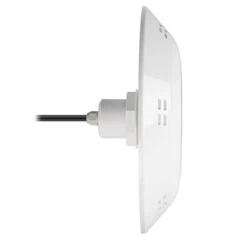


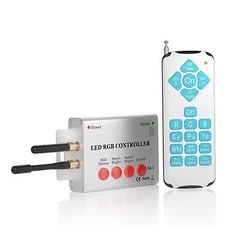
In the dynamic world of lighting control, RGB DMX controllers stand as a cornerstone for creating captivating and immersive lighting experiences. As a seasoned supplier of RGB DMX controllers, I often encounter a frequently asked question: "What is the maximum number of fixtures an RGB DMX controller can handle?" This blog post aims to delve into this query, exploring the factors that influence the capacity of RGB DMX controllers and providing insights to help you make informed decisions for your lighting projects.
Understanding RGB DMX Controllers
Before we dive into the maximum fixture capacity, let's briefly understand what RGB DMX controllers are. RGB DMX controllers are devices that allow you to control the color and intensity of RGB (Red, Green, Blue) lighting fixtures using the DMX (Digital Multiplex) protocol. The DMX protocol is a standard communication protocol used in the lighting industry to transmit digital data between lighting controllers and fixtures.
RGB DMX controllers offer a wide range of features and capabilities, including the ability to create custom lighting scenes, synchronize lighting effects with music or other media, and control multiple fixtures simultaneously. They are commonly used in various applications, such as stage lighting, architectural lighting, event lighting, and entertainment venues.
Factors Affecting the Maximum Number of Fixtures
The maximum number of fixtures an RGB DMX controller can handle depends on several factors, including:
1. DMX Addressing
Each RGB lighting fixture requires a unique DMX address to communicate with the controller. The DMX protocol supports a maximum of 512 channels, which means that the total number of DMX addresses available is limited. The number of DMX channels required per fixture depends on its functionality. For example, a basic RGB fixture typically requires 3 channels (one for each color), while a more advanced fixture with additional features such as strobe, dimming, or gobo control may require more channels.
To calculate the maximum number of fixtures based on DMX addressing, you need to divide the total number of available DMX channels (512) by the number of channels required per fixture. For instance, if you have a basic RGB fixture that requires 3 channels, the maximum number of fixtures you can connect to a single DMX universe is 512 / 3 ≈ 170 fixtures.
2. Power Supply
Another crucial factor to consider is the power supply capacity of the RGB DMX controller and the connected fixtures. Each lighting fixture consumes a certain amount of power, and the controller needs to be able to provide sufficient power to all the connected fixtures. If the power supply is insufficient, it can lead to issues such as flickering lights, inconsistent color output, or even damage to the fixtures.
When determining the maximum number of fixtures, you need to consider the power requirements of each fixture and ensure that the total power consumption does not exceed the capacity of the controller's power supply. It is also important to use high-quality power cables and connectors to minimize power loss and ensure stable operation.


3. Signal Integrity
The DMX signal needs to be transmitted over a cable to reach all the connected fixtures. As the number of fixtures increases, the length of the cable also increases, which can lead to signal degradation and interference. This can result in issues such as inconsistent lighting effects, color shifting, or loss of communication between the controller and the fixtures.
To maintain signal integrity, it is recommended to use high-quality DMX cables with proper shielding and termination. You may also need to use DMX signal amplifiers or repeaters to boost the signal strength and extend the maximum cable length. Additionally, it is important to avoid running DMX cables parallel to power cables or other sources of electromagnetic interference.
4. Controller Capabilities
The capabilities of the RGB DMX controller itself also play a role in determining the maximum number of fixtures it can handle. Some controllers are designed to handle a larger number of fixtures and channels than others. Higher-end controllers may offer features such as multiple DMX universes, advanced programming capabilities, and better signal processing, which can allow for the control of a greater number of fixtures.
When choosing an RGB DMX controller, it is important to consider your specific requirements and the scale of your lighting project. If you need to control a large number of fixtures, you may need to invest in a more powerful and feature-rich controller.
Practical Considerations
In real-world applications, the maximum number of fixtures an RGB DMX controller can handle may be lower than the theoretical limit due to practical considerations. For example, it is often recommended to leave some spare DMX channels for future expansion or to accommodate any unforeseen issues. Additionally, the complexity of the lighting effects and the frequency of updates can also affect the performance of the controller and the connected fixtures.
It is also important to test the RGB DMX controller and the connected fixtures in a real-world environment before deploying them in a large-scale project. This can help you identify any potential issues and make any necessary adjustments to ensure optimal performance.
Case Studies
To illustrate the practical implications of the maximum fixture capacity, let's consider a few case studies:
Case Study 1: Small-Scale Event Lighting
For a small-scale event, such as a birthday party or a corporate meeting, you may only need to control a handful of RGB lighting fixtures. In this case, a basic RGB DMX controller with a limited number of channels may be sufficient. For example, a controller that can handle up to 32 channels can easily control 10 - 12 basic RGB fixtures, providing a simple yet effective lighting solution.
Case Study 2: Medium-Scale Stage Lighting
In a medium-scale stage production, such as a local theater performance or a music concert, you may need to control a larger number of fixtures to create more complex lighting effects. A controller with multiple DMX universes and a higher channel capacity may be required. For instance, a controller that can handle two DMX universes (1024 channels in total) can potentially control up to 300 - 400 basic RGB fixtures, allowing for a more dynamic and immersive lighting experience.
Case Study 3: Large-Scale Architectural Lighting
For large-scale architectural lighting projects, such as illuminating a skyscraper or a public building, the number of fixtures can be in the thousands. In this case, a high-end RGB DMX controller with advanced features and a large channel capacity is essential. Additionally, multiple controllers may need to be used in conjunction with each other to control the entire lighting system. For example, a network of controllers can be used to manage different zones or sections of the building, ensuring seamless and coordinated lighting effects.
Conclusion
In conclusion, the maximum number of fixtures an RGB DMX controller can handle depends on several factors, including DMX addressing, power supply, signal integrity, and controller capabilities. While the theoretical limit is determined by the number of available DMX channels (512), practical considerations such as power consumption, signal degradation, and controller performance may result in a lower maximum number of fixtures in real-world applications.
As a supplier of RGB DMX controllers, we understand the importance of providing high-quality products that meet the diverse needs of our customers. Our controllers are designed to offer a balance between performance, reliability, and affordability, allowing you to create stunning lighting effects for your projects.
If you are interested in learning more about our RGB DMX controllers or have any questions about the maximum number of fixtures they can handle, please feel free to [initiate a conversation with us]. We would be delighted to assist you in selecting the right controller for your specific requirements and provide you with expert advice and support throughout your lighting project.
References
- "DMX512-A Standard for Control of Lighting Equipment" - Entertainment Services and Technology Association (ESTA)
- "Lighting Control Handbook" - Various industry publications
- "LED Lighting Technology and Applications" - Academic research papers