


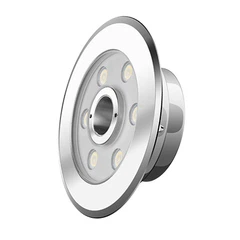


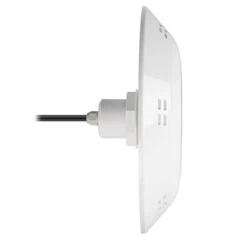


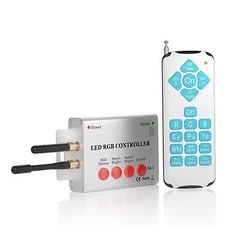
Underwater lights are designed for underwater environments, which may cause a series of problems if used on land for a long time. However, we still have some clients coming to us asking the question: can we use Outdoor underwater lights for long-term lighting on land? The answer is absolutely NO! LED underwater lighting can not be used for long-term on land mainly because of 4 reasons:
1. The heat dissipation design does not match, resulting in overheating damage:
-Underwater environment: Water has high thermal conductivity and can quickly carry away the heat of the lamp, usually without additional radiators
-Land environment: the heat conduction efficiency of air is only 1/25 of that of water, and the heat dissipation capacity of lamps is greatly reduced, and long-term operation will lead to:
A)LED light decay is accelerated (junction temperature increases by 10 ℃, life is halved)
B)Power drive overheating (electrolytic capacitor dry, MOS tube burned)
C)Shell deformation or sealant aging (silica gel embrittlement at high temperature, waterproof failure)
The waterproof structure impedes heat dissipation: the IP68 underwater LED lights adopt a fully sealed design (IP68), which relies on the passive heat dissipation of the shell, and the heat can not be effectively dissipated when the land is used
3. Acceleration of material aging :
-Underwater environment: constant temperature, decreased ultraviolet (UV) irradiation.
-Terrestrial environment:
Ultraviolet radiation: Causes the plastic casing to become brittle and the color to fade
Temperature difference between day and night: thermal expansion and cold contraction make the sealant crack and cause waterproof failure
4. The power driver is not compatible: Waterproof Outdoor Underwater Light drives are usually designed for constant current output, but high land temperatures can trigger overtemperature protection, resulting in stroboscope or power outages

If consumers insist on using IP68 waterproof underwater lights on land for a long time, it may cause the following potential consequences:
1. LED chip damage: Luminous flux decreased by more than 30%, color temperature drift (such as 6000K→5500K)
2. Power drive failure: Capacitor bulge, IC burn, luminaires flicker or completely fail
3. Structural failure: Sealant cracking, water, and short circuit risk increased
4. Security risk: The high temperature of the LED underwater pool light shell (> 80 ℃) may burn users or ignite surrounding materials.
Now you can understand why the IP68 LED underwater lighting can not be used long-term on land. Of course, if we make some changes, it can achieve long-term land use. Contact us to get more details ~
